What is DRT, and how does it work in Saudi Arabia?
DRT, also called an on-demand ride service, is shared public transport that has no fixed route and no timetable. Instead of publishing a schedule and hoping it matches demand, a DRT operator collects the demand first and builds the route around it.
The idea in one paragraph
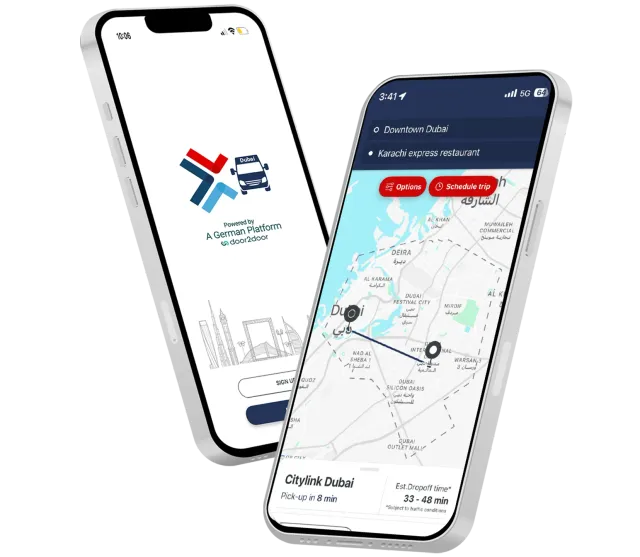
A conventional bus route is a bet placed months in advance: this road, these stops, every fifteen minutes. It is right at rush hour and wrong at eleven in the morning. Demand Responsive Transport removes the bet. Passengers request journeys through an app, a routing engine works out the most efficient way to serve the requests it is currently holding, and the vehicle follows that plan, recalculated as new requests arrive.
The trade the passenger makes is small and specific: you share the van with others going the same way, and you do not know the exact route in advance. In return the van comes directly to the pickup location you select, at a fare far below a private car.
Fixed route
The bus keeps to its road and its stops, every trip. Passengers walk to the line.
Demand-responsive route
The route is drawn from the requests, and the van comes to each passenger’s selected pickup location.
DRT next to the alternatives
| Citylink (DRT) | Scheduled bus | Taxi / ride-hailing | |
|---|---|---|---|
| Route | Planned in real time from requests | Fixed and published | Direct, door to door |
| Timetable | None: you request a trip | Fixed departures | On request |
| Pickup | Door to door: the location you select | Fixed stops | Your door |
| Shared | Yes, with people going the same way | Yes | No |
| Booking needed | Yes, in the app | No | Yes, or hailed |
Fare comparisons are deliberately absent: the app shows the price of each trip in the proposal, and publishing a side-by-side figure would mean inventing one.
What DRT means when you ride
Four consequences of having no timetable, all of them worth knowing before your first trip.
The van comes to you
Select your pickup location in the app and the van comes directly to it. No walking to a stop.
Be there on time
Holding a shared vehicle costs everyone else on it time, so if you are not at your pickup location at the time in your proposal, the driver does not have to wait.
The route may differ
Two trips between the same places can follow different roads, because the other passengers are different.
Leave a margin when it matters
If your arrival time is fixed, request your ride with time to spare: the van is shared and serves other passengers too.
Try demand-responsive transport
Booking, your pickup location and the details of each trip are all in the Citylink app. Download it, set your destination and book your first ride.